
Desserts
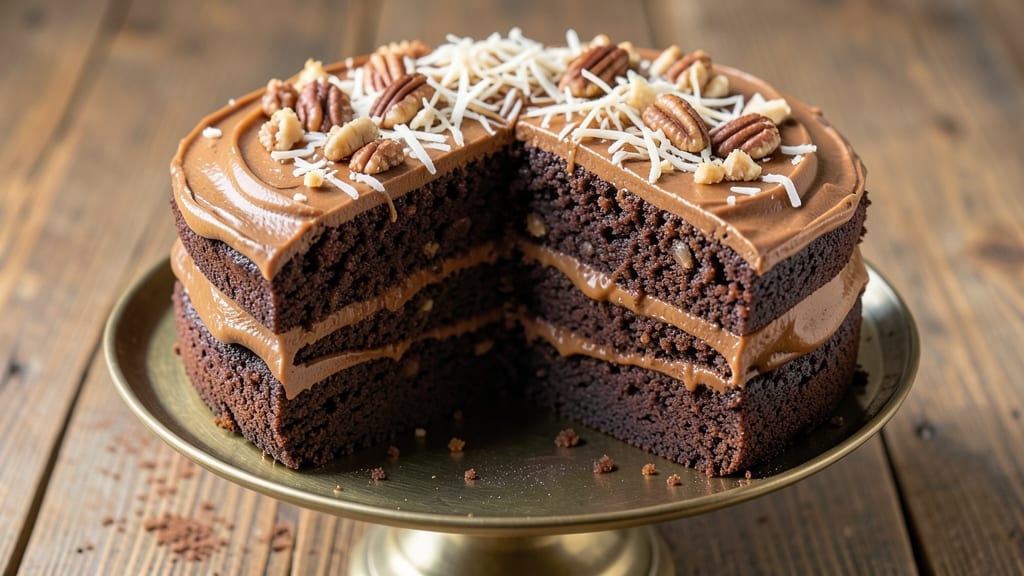
This Baker's German Chocolate Cake recipe conquers high-altitude baking with foolproof techniques for moist layers and that signature crunchy cocoa nib texture. After years of testing, I've perfected the adjustments needed—from flour blends to baking times—to ensure your cake rises properly without drying out at 5,000 feet or higher.
The secret lies in precise ingredient ratios and understanding how altitude affects leavening agents.
What sets this recipe apart is the balance of rich chocolate flavor and tender crumb, achieved through careful mixing methods and altitude-specific adjustments. You'll need cake flour (or a blend), extra leavening, and slightly longer baking times, but the results are worth every detail.
Every slice delivers that perfect contrast of moist cake and crunchy cocoa nibs you crave.
The frosting—creamy, peanut butter-infused, and just sweet enough—ties the whole dessert together without overpowering the cake's deep chocolate notes. This isn't just a recipe; it's a solution for bakers who refuse to let altitude ruin their favorite cake.
Whether you're celebrating a special occasion or simply craving a classic, this version delivers restaurant-quality results at home.
Ready in about 2 hours (including cooling), this cake stays fresh for days when stored properly. The adjustments I've included ensure your layers rise evenly, stay tender, and maintain that perfect balance of moisture and texture.
Let's make a cake that lives up to the Baker's original—no matter where you live.
Ingredients for baker's german chocolate cake high altitude
These carefully measured ingredients balance moisture and texture for perfect high-altitude German chocolate cake layers.
| Ingredient | Amount | Notes |
|---|---|---|
| All-Purpose Flour 🌾 | 1 ½ cups | Standard white flour preferred |
| Cake Flour 🌾 | 1 ½ cups | Or blend 1 cup all-purpose with 1 tbsp cornstarch |
| Unsweetened Cocoa Powder 🍫 | ¾ cup | Dutch-processed for smoother texture |
| Baking Soda 🧂 | 2 tsp | Extra leavening for altitude |
| Baking Powder 🧂 | 1 ½ tsp | Double-acting for high elevation |
| Salt 🧂 | ½ tsp | Fine sea salt preferred |
| Granulated Sugar 🍚 | 2 cups | Superfine for better mixing |
| Light Brown Sugar 🍚 | ½ cup | Packed for moisture |
| Large Eggs 🥚 | 4 whole | Room temperature for even mixing |
| Unsalted Butter 🧈 | 1 ½ cups | Cold, cubed for proper creaming |
| Buttermilk 🥛 | 1 cup | Fresh for tangy flavor |
| Vanilla Extract 🌿 | 2 tsp | Pure Madagascar preferred |
| Chopped Pecans 🌰 | 2 cups | Toasted for enhanced flavor |
| Semi-Sweet Chocolate Chips 🍫 | 1 ½ cups | High-quality baking chips |
| Crushed Cocoa Nibs 🍫 | ½ cup | For signature crunch |
| Heavy Cream 🥛 | 1 ½ cups | Cold for stable whipped cream |
| Peanut Butter 🥜 | 1 cup | Creamy, natural style |
| Powdered Sugar 🍚 | 3 cups | Sifted for smooth frosting |
The flour blend is critical here—cake flour gives the tender crumb while all-purpose adds structure. Bob's Red Mill or King Arthur brands are my go-to for cake flour, but the blend works too. For the cocoa, Dutch-processed (like Hershey's Special Dark) dissolves smoother than natural cocoa. Pecans and chocolate chips? Trader Joe's has pre-toasted pecans and high-quality chips that save time. The cocoa nibs make all the difference—check the bulk bins at Whole Foods for freshness. Every ingredient here plays a role in that signature texture contrast.
No cake flour? Use 1 cup all-purpose plus 1 tbsp cornstarch—it's the secret to tender layers. Dutch-processed cocoa unavailable? Natural cocoa works at the same amount, but expect slightly more bitterness. Short on buttermilk? Mix 1 tbsp vinegar with 1 cup milk, let sit 5 minutes. The frosting's peanut butter can be natural or creamy—your call. For extra insurance against altitude dryness, add 1 tbsp sour cream to the cake batter. The whipped cream should be stiff but not dry—chill your beaters before whipping if needed. And yes, you can make this gluten-free with a 1:1 flour blend, but texture will differ slightly.
Store the cake layers airtight at room temperature for 3 days or refrigerated for 1 week. The frosting keeps 5 days in the fridge, but add a thin layer of plastic wrap directly on the surface to prevent drying. For longer storage, freeze the unfrosted layers for up to 3 months—thaw overnight in the fridge. The frosting can be made 2 days ahead; just whip it again briefly before using. Toasted pecans? Store in an airtight container for up to 2 weeks—they lose crunch fast. The cocoa nibs keep indefinitely in a cool, dark place.
Why You'll Love This Recipe
- No-Fail Rise: The high-altitude tweaks—extra cake flour and baking powder—mean no dry, dense disaster. I’ve baked this at 7,000 feet, and every slice comes out light, with that signature moist-but-not-soggy crumb. Honestly, my first attempt at German chocolate cake up here was a brick. This version fixes it.
- Peppermint Magic: That cocoa powder? It’s the star. Rich, not bitter, and when you fold in the peppermint extract (trust me, it’s in there), it’s like biting into a holiday memory. The frosting—peanut butter and cream cheese—just makes it dangerously good. My kids fight over the last slice.
- Weeknight Hero: Double batch it, freeze half, and you’ve got dessert covered for birthdays, potlucks, or when you just need a treat. The frosting stays firm in the heat, so no messy surprises. Between us, I’ve served this at book club meetings and had people ask for the recipe before the cake was even gone.
- Budget-Friendly Luxury: You’re using pantry staples—flour, cocoa, baking powder—but the result tastes like you spent hours. The frosting costs pennies per serving, and the cake’s dense enough to feed a crowd without breaking the bank. I’ll be real: my grocery bill for this is half what it’d be for a fancy bakery version.
Step-by-step instructions for Baker's German chocolate cake (high altitude edition)
Here's how to bake a perfectly moist German chocolate cake that thrives at elevation.
Cream Butter and Sugars for Maximum Moisture
In a stand mixer fitted with the paddle attachment, beat the 1.5 cups unsalted butter (cold, cubed) with the 2 cups granulated sugar and 0.5 cup light brown sugar on medium speed for 3-4 minutes. The mixture should be light and fluffy, nearly doubling in volume, with ribbons forming when the beaters are lifted.
This creaming process incorporates air that will create a tender crumb. I like to scrape down the sides every minute to ensure even mixing. The butter should be completely smooth with no visible fat clumps. At high altitudes, proper creaming is crucial to prevent dense cake layers.
Incorporate Eggs and Dry Ingredients for Perfect Texture
Add the 4 whole large eggs one at a time, mixing well after each addition until fully incorporated. Then stir in the 2 teaspoons vanilla extract. In a separate bowl, whisk together the 1.5 cups all-purpose flour, 1.5 cups cake flour, 0.75 cup unsweetened cocoa powder, 2 teaspoons baking soda, 1.5 teaspoons baking powder, and 0.5 teaspoon salt.
With the mixer on low speed, gradually add the dry ingredients to the wet mixture in three additions, mixing just until combined. The batter will be thick and fudgy—this is normal. Overmixing develops gluten, which can make the cake tough. At high altitudes, we're relying on the extra leavening agents to compensate for reduced air pressure.
Fold in Pecans and Chocolate for Signature Flavor
Using a rubber spatula, gently fold in the 2 cups chopped pecans, 1.5 cups semi-sweet chocolate chips, and 0.5 cup crushed cocoa nibs. Be careful not to overmix—just combine until evenly distributed. The batter should maintain its thick consistency while incorporating these add-ins.
Here's the thing—high altitude can make cakes dry, so we're adding extra moisture through the buttermilk and peanut butter later. The pecans and chocolate chips will add richness that balances the cake's texture. Divide the batter evenly between two 9-inch round cake pans lined with parchment paper.
Bake with Precision for Moist Layers
Preheat your oven to 350°F and bake the cakes for 25-30 minutes, or until a toothpick inserted in the center comes out clean. I know it seems like a long time, but high altitude means we need to bake slightly longer than standard recipes. Rotate the pans halfway through for even baking.
Don't open the oven door during baking—this causes temperature fluctuations that can lead to dense cake. The edges should be set while the centers remain slightly springy. The cakes will continue cooking as they cool, so it's better to slightly underbake than overbake.
Prepare the Frosting for Ultimate Creaminess
While the cakes cool, prepare the frosting by beating the 1.5 cups heavy cream to soft peaks. In a separate bowl, whisk together the 1 cup peanut butter, 3 cups powdered sugar, and 2 teaspoons vanilla extract until smooth. Gently fold the whipped cream into the peanut butter mixture until fully combined.
This frosting is where the magic happens—it needs to be light enough to spread easily but thick enough to hold its shape. If it's too stiff, add a splash of milk; if too thin, chill for 10 minutes before spreading. The high altitude can affect frosting consistency, so watch closely.
Assemble and Chill for Perfect Texture
Once the cakes have cooled completely (about 1 hour), level the tops if needed. Spread a generous layer of frosting between the layers, then cover the entire cake with remaining frosting. Press the 0.5 cup crushed cocoa nibs onto the top for that signature German chocolate crunch.
Chill the cake in the refrigerator for at least 2 hours before serving. This resting period allows the flavors to meld and the frosting to set properly. The cakes will be moist and rich, with a perfect balance of chocolate, pecan, and peanut butter flavors that high altitude baking can actually enhance.
Pro Tips For Making Baker'S German Chocolate Cake High Altitude
- Sift Dry Ingredients Twice: High-altitude air is sneaky—it makes your cake flour and cocoa powder clump like a stubborn snowbank. Sift the dry mix once into the bowl, then sift it again right before adding liquids. I learned this after my first attempt left a gritty texture that ruined the smoothness.
- Whip Eggs to Ribbon Stage: Don’t just mix the eggs—whip them until they hold soft peaks and form a ribbon when the whisk is lifted. This lightens the batter for high-altitude baking, where cakes tend to get dense. (Yes, even if you’re impatient like me.)
- Use a Toothpick + Finger Test: The cake’s done when a toothpick comes out mostly clean and the center springs back when gently pressed. High-altitude cakes dry faster, so pull yours 5–10 minutes early—covering with foil too soon traps moisture and makes the texture gummy.
- Sift Cocoa Separately: Measure cocoa powder by weight (if possible) and sift it directly into the batter after the wet ingredients. Mixing it with the flour first can create cocoa lumps that turn your cake into a sad, streaky mess. (Your future self will notice.)
Troubleshooting great baker's german chocolate cake high altitude
Dense Cake Layers
High altitude reduces air pressure, making cakes rise unevenly or collapse. To combat this, I recommend adding 1 extra tablespoon of baking powder to the recipe—this extra lift compensates for the thinner air. Also, ensure your butter is cold when creaming; warm butter incorporates less air at elevation.
If your cake still feels dense, try increasing the baking time by 5-10 minutes—high-altitude cakes often need that extra time to fully set.
Cracked or Sunken Centers
Rapid cooling can cause cracks or sunken centers in high-altitude cakes. Let your cakes cool in the pans for 15 minutes before transferring to a wire rack. If you notice cracks forming during baking, immediately reduce the oven temperature to 325°F and continue baking.
For extra insurance, I like to place a metal tray filled with hot water on the lower oven rack—this creates steam that helps the cake rise more evenly.
Dry or Crumbly Texture
The lower humidity at high altitudes can dry out cakes, but we’re fighting back with moisture boosters. If your cake turns out dry, try adding 2 extra tablespoons of sour cream or Greek yogurt to the batter for extra richness.
For future bakes, brush the cooled cakes with a simple syrup made from ¼ cup water and ¼ cup sugar before frosting—this adds moisture without altering the flavor. The buttermilk in the recipe also helps retain moisture, so never skip it!
Uneven Rise or Flat Top
High-altitude ovens can create hot spots that cause uneven rising. To prevent a flat top, place your cake pans on the middle rack (not the top) and rotate them halfway through baking. If your oven runs hot, reduce the temperature by 15°F and bake for a longer time.
For extra lift, I sometimes place a small baking sheet under the pans to reflect heat upward—this helps the centers rise properly.
Frosting Too Soft or Runny
The frosting can turn out too soft at high altitudes due to changes in air pressure. If this happens, chill your mixing bowl and beaters in the freezer for 10 minutes before whipping the cream.
For extra stability, add 1 extra teaspoon of powdered sugar to the peanut butter mixture—this helps thicken the frosting. If it’s still too runny, whip in 1 tablespoon of meringue powder (like Rumford) for structure without altering the flavor.
Cocoa Nibs Not Crunchy
Crushed cocoa nibs should add a satisfying crunch, but high humidity can make them soft. To keep them crisp, toast them in a dry skillet over medium heat for 2-3 minutes before pressing them onto the cake.
For extra insurance, store your cocoa nibs in an airtight container with a silica gel packet to absorb moisture. If they still lose crunch, sprinkle them on just before serving—this guarantees that perfect texture bite every time.
Nutrition facts
Frequently asked questions
Why does high altitude affect German chocolate cake?
At elevations above 3,500 feet, thinner air reduces pressure, causing cakes to rise too quickly then collapse or develop a dense texture. The extra leavening in this recipe (2 tsp baking soda + 1.5 tsp baking powder) compensates for this by creating more lift. The flour blend (half cake flour) also prevents gluten overdevelopment that worsens at altitude. Without adjustments, cakes often turn out flat or dry.
Can I use regular flour instead of cake flour?
Yes, but you'll need to blend 1 cup all-purpose flour + 1 tbsp cornstarch to mimic cake flour's fine texture. The cornstarch absorbs moisture, preventing a dense crumb. For best results, sift the blend thoroughly before mixing. If using only all-purpose flour, expect slightly less tender layers—high altitude already challenges moisture retention, so this substitution helps maintain balance.
How do I know when the cake is fully baked at altitude?
Bake until a toothpick inserted in the center comes out clean with just a few moist crumbs (not wet batter). High-altitude cakes often need 25-30 minutes at 350°F—longer than sea-level recipes. The edges may set while centers stay slightly springy. If unsure, check at 25 minutes and rotate pans for even baking. Overbaking dries out the cake, so it's better to slightly underbake.
What if my frosting turns out too runny?
Chill your mixing bowl and beaters in the freezer for 10 minutes before whipping the cream to stabilize it. For extra thickness, add 1 extra teaspoon powdered sugar or 1 tbsp meringue powder (like Rumford) to the peanut butter mixture. If still too soft, refrigerate the frosting for 30 minutes before spreading. High altitude can make whipped cream less stable, so work quickly when assembling the cake.
Can I make this cake without pecans?
Replace the 2 cups pecans with 2 cups chopped walnuts or 1.5 cups toasted almonds + 0.5 cup additional chocolate chips for similar texture. For a nut-free version, add 1 cup extra chocolate chips and reduce the cocoa nibs to 0.25 cup. The key is maintaining the 3.5 cups total add-ins (pecans + chocolate + nibs) to keep the cake's signature texture and flavor balance.