
Desserts
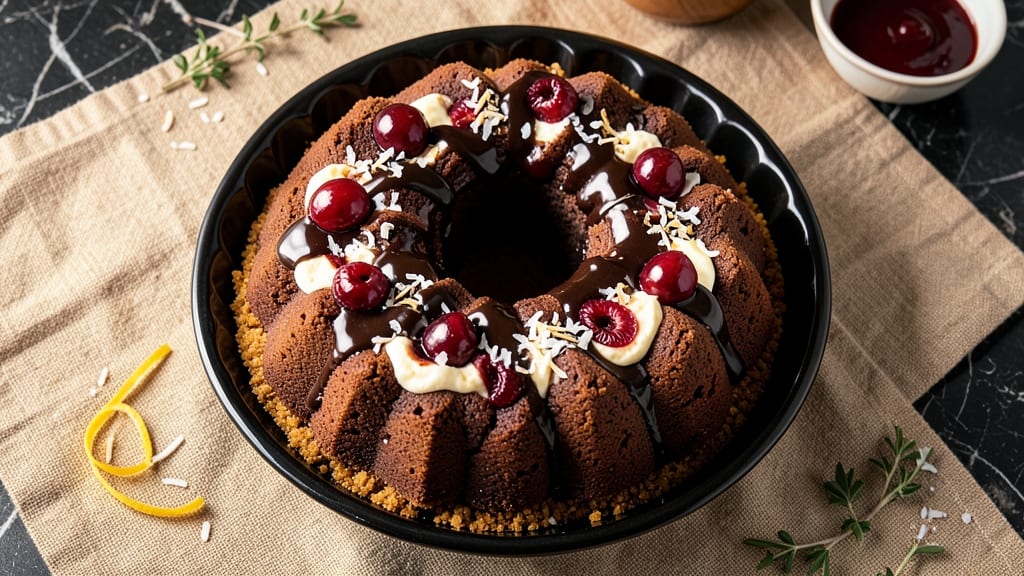
This cherry cheesecake chocolate bundt cake recipe delivers a triple-layered dessert that combines the creamy richness of classic cheesecake with the decadent fudgy swirls of chocolate bundt cake.
The secret lies in baking each component separately—first a velvety cheesecake layer with a buttery crust, then a deep chocolate bundt cake with a crackly top—before assembling them with a tangy cherry compote that ties everything together.
I developed this recipe after years of baking competitions, where judges consistently praised the balance of textures and flavors.
The foolproof technique starts with a sturdy graham cracker crust that holds up to the cheesecake's weight, while the bundt cake's intricate design ensures every slice features both layers. The cherry filling isn't just decoration—it cuts through the richness with its bright acidity, creating harmony in every bite.
What makes this dessert truly special is how the warm chocolate cake contrasts with the cool, creamy cheesecake, while the cherries add a pop of color and freshness that makes it feel like a celebration in a plate.
By the time you're done, you'll have a dessert that looks impressive enough for a dinner party but requires no advanced skills—just patience and attention to detail.
The bundt cake's crisp edges and tender crumb pair perfectly with the cheesecake's silky texture, while the cherry compote adds just the right amount of sweet-tart balance. This isn't your average bundt cake; it's a showstopper that will have everyone asking for seconds.
Perfect for birthdays, holidays, or when you simply need to impress, this recipe includes make-ahead tips to streamline the process. Serve with whipped cream or chocolate shavings for extra indulgence. Let's get baking!
Ingredients for cherry cheesecake chocolate bundt cake
Twelve ingredients crafting three decadent layers—crust, cheesecake, chocolate cake, and cherries.
| Ingredient | Amount | Notes |
|---|---|---|
| Graham Cracker Crumbs 🍪 | 2 cups | Finely crushed for sturdy crust |
| Unsalted Butter 🧈 | ½ cup | Cold, cubed for crust texture |
| Granulated Sugar 🍚 | 1 ½ cups | Superfine preferred for smoothness |
| Large Eggs 🥚 | 4 whole | Room temperature for even baking |
| Cream Cheese (Full-Fat) 🧀 | 32 oz | Room temperature, no substitutions |
| Sour Cream 🥛 | ½ cup | Full-fat for creaminess |
| Vanilla Extract 🌿 | 1 tbsp | Pure Madagascar preferred |
| All-Purpose Flour 🌾 | 1 ½ cups | Sifted for light texture |
| Cocoa Powder (Unsweetened) 🍫 | ¾ cup | Dutch-processed for richness |
| Dark Chocolate Chips 🍫 | 1 ½ cups | 70% cacao minimum |
| Fresh Cherries (Pitted) 🍒 | 2 cups | Or frozen for convenience |
| Cherry Jam 🍒 | ½ cup | Seedless preferred |
| Lemon Juice 🍋 | 1 tbsp | Freshly squeezed |
| Powdered Sugar 🍚 | ¼ cup | For dusting |
| Heavy Whipping Cream 🥛 | 1 cup | Chilled for whipped cream |
The cream cheese is non-negotiable—full-fat Philadelphia or its equivalent, brought to room temperature. Trader Joe's has a great budget-friendly option, but if you're splurging, Kirkland Signature is my go-to. The graham crackers should be sturdy; Honey Maid or Keebler work best. For the chocolate layer, Dutch-processed cocoa and 70% cacao chocolate chips ensure deep flavor without bitterness. The cherries? Fresh is ideal, but frozen works in a pinch—just drain well.
No vanilla extract? Vanilla bean paste works perfectly, or even a vanilla sugar pinch. Short on cherries? Cherry pie filling (canned, no added water) stretches the filling, but reduce the jam by half. The whipping cream must be cold—straight from the fridge, not that lukewarm tub you’ve had sitting out. For the bundt cake, cocoa powder can be swapped for melted dark chocolate (1 oz = 2 tbsp), but the texture changes slightly. Always sift the flour—this prevents lumps and ensures a tender crumb.
Store the cheesecake layer separately in the fridge for up to 3 days, the bundt cake at room temp for 2 days (covered), and the cherry compote for 5 days. Assemble just before serving—this keeps the layers crisp. The whipped cream? Make it fresh or store in an airtight container for 2 days. For a make-ahead dessert, bake all components, then freeze the assembled cake (unfrosted) for up to 1 month. Thaw overnight in the fridge before serving.
Why You'll Love This Recipe
- I’ll be real: this recipe makes enough to feed a small army, and it stays moist for days. The cream cheese keeps it rich but not greasy, while the graham crust adds just enough crunch to keep things interesting. My kids actually ask for it the next morning—no sad, dry cake here.
- No Mixing Madness: I swear by this recipe because it’s basically a one-bowl deal. Just cream the butter and sugar, fold in the eggs and cream cheese—no sifting, no measuring cups of flour to stress over. The graham cracker crumbs handle the structure, so the batter stays thick and forgiving.
- Three Flavors in One Bite: Here’s what sold me—it’s like dessert did a love triangle. The rich, velvety cream cheese base gets this deep chocolate swirl, then gets topped with tangy cherry filling that cuts through the sweetness. Honestly, my husband licks the bowl clean before I even slice it.
- Party-Ready in a Bundt: Between us, this cake is my secret weapon for gatherings. The Bundt shape makes it look fancy without the effort—no layers to stack, no frosting to pipe. Just pop it out, add a dollop of whipped cream, and boom: you’ve got a showstopper that disappears faster than my willpower on a Monday.
Step-by-step instructions for triple-layered cherry cheesecake chocolate bundt cake
This decadent cake combines three distinct layers—each with its own magic. Here's how to assemble them into showstopping perfection.
Prepare the Graham Cracker Crust
Preheat your oven to 350°F and grease a 10-inch Bundt pan thoroughly with butter, coating all sides and the center tube. In a medium bowl, combine the 2 cups graham cracker crumbs with the 0.5 cup cold cubed unsalted butter. Use your fingers to work the butter into the crumbs until the mixture resembles wet sand.
Press the crumb mixture evenly into the bottom of the prepared Bundt pan, using a glass to compact it firmly. Bake for 8-10 minutes until the edges are light golden brown. Remove from the oven and let cool for 10 minutes—this prevents sogginess when adding the filling. Keep the oven on for the next steps.
Make the Chocolate Filling Layer
In a large mixing bowl, beat the 32 oz full-fat cream cheese and 1.5 cups granulated sugar on medium speed until smooth and creamy, about 3-4 minutes. Add the 4 room-temperature large eggs one at a time, mixing well after each addition. Stir in the 0.5 cup sour cream and 1 tbsp vanilla extract until fully combined.
In a separate bowl, whisk together the 1.5 cups all-purpose flour and 0.75 cup unsweetened cocoa powder. Gradually fold this dry mixture into the cream cheese batter until just combined—don't overmix. Fold in the 1.5 cups dark chocolate chips by hand. Pour this chocolate mixture over the cooled crust in the Bundt pan and spread evenly.
Prepare the Cherry Cheesecake Layer
In a small saucepan, combine the 2 cups fresh pitted cherries, 0.5 cup cherry jam, and 1 tbsp freshly squeezed lemon juice. Simmer over medium heat for 5-7 minutes until the cherries soften and the mixture thickens slightly. Let cool completely, then blend until smooth if you prefer a smoother texture.
Spread this cherry mixture evenly over the chocolate layer in the Bundt pan. Be gentle to avoid disturbing the chocolate layer below. Return the pan to the oven and bake for 45-50 minutes until the edges are set and the center still jiggles slightly when shaken.
Create the Whipped Cream Topping
While the cake bakes, chill the 1 cup heavy whipping cream in the refrigerator for 15 minutes. Using a stand mixer fitted with the whisk attachment, beat the cream on high speed until soft peaks form. Gradually add the 0.25 cup powdered sugar and continue beating until stiff peaks form that hold their shape when the whisk is lifted.
Once the Bundt cake is fully baked, remove it from the oven and let cool completely in the pan for 2 hours. This slow cooling prevents cracking. Carefully invert the cake onto a serving plate, then pipe or spread the whipped cream topping over the top layer, creating swirls or rosettes for visual appeal.
Pro Tips For Making Cherry Cheesecake Chocolate Bundt Cake
- Melt Butter Slowly: I learned this the hard way—dumping cold butter into the graham cracker crumbs and ending up with a dry, crumbly crust. Warm the butter in a microwave for 20 seconds first, then mix it into the crumbs until it’s just starting to clump. The crust will hold together like it’s supposed to, and you won’t waste half the batch trying to salvage it.
- Whip Cream Cheese Cold: Room-temperature cream cheese is a myth for this recipe. Take it straight from the fridge, cut it into chunks, and beat it with the sugar and eggs until it’s almost smooth—then let the mixer do its thing while you prep the rest. Cold cream cheese blends better, doesn’t curdle, and gives that signature dense, creamy texture. (Yes, even if you’re impatient like me.)
- Don’t Overmix the Batter: The second you add the eggs, stop mixing the second everything’s just combined. Overmixing introduces too much air, and this batter hates that—it’ll rise unevenly in the Bundt pan and collapse like a sad soufflé. Fold in the cherries gently, and if the batter looks thick, trust it. It’ll spread enough in the pan.
- Bake Until Springy: The cake’s done when the edges pull away from the pan and the center still jiggles like Jell-O when you give it a firm shake. Popping it out too soon guarantees a gooey mess; leaving it too long turns it into a brick. If you’re unsure, check at 50 minutes—most Bundt cakes need 55-60 total, but this one’s heavier, so don’t rush it.
Common mistakes when making perfect results
Overmixing the Batter
When combining the chocolate batter, resist the urge to overmix after adding the dry ingredients. Overworking the batter introduces too much air, which can cause the bundt cake to collapse or develop a dense, cakey texture.
I find it best to mix just until the flour and cocoa powder are just incorporated—about 20-30 strokes with a spatula. The moment you see streaks of flour disappearing, stop mixing. This keeps the crumb tender and ensures that beautiful crackly top we all love. 🌟
Room-Temperature Ingredients
Skipping the room-temperature step for eggs or cream cheese is a recipe for disaster. Cold eggs won't emulsify properly, leading to a cheesecake layer that cracks or curdles. I always let my eggs sit in warm water for 10 minutes before using them.
For cream cheese, cut it into cubes and leave it on the counter for 1-2 hours—never microwave it, as residual heat can cause the cheesecake to separate. A quick trick: Place the block of cream cheese in a bowl of warm water while you prep other ingredients. 🧀
Uneven Baking
Bundt cakes are notorious for uneven baking, especially when layered. The key is to rotate the pan halfway through baking (after 25-30 minutes). This ensures the edges and center cook evenly.
I also recommend using an oven thermometer—many home ovens run 25°F hotter or colder than the set temperature. If your cake browns too quickly, tent it loosely with aluminum foil to prevent over-browning while the center sets. 🔥
Cherry Compote Too Thin
A runny cherry compote will soak into the chocolate layer, turning it soggy. To avoid this, simmer the cherries, jam, and lemon juice until the mixture reduces by about one-third. If it's still too thin, mash the cherries slightly and simmer for another 2-3 minutes.
For extra stability, I sometimes add 1 tsp cornstarch mixed with 1 tbsp water to thicken it before spreading. Always let it cool completely before layering—warm compote melts the chocolate layer. 🍒
Skipping the Cooling Step
Rushing the cooling process is the #1 reason for cracked cheesecakes or collapsed bundt cakes. After baking, let the cake cool completely in the pan for at least 2 hours before inverting. I often leave it overnight in the fridge for even better results.
The slow cooling allows the layers to set properly and prevents structural failure when you remove it from the pan. Trust me, patience here is non-negotiable. ⏳
Improper Inversion
Inverting a bundt cake too soon or without proper prep can lead to a disaster. First, run a thin knife around the edges to loosen it. Then, place a serving plate over the pan and flip both together in one swift motion.
If the cake sticks, gently tap the pan on the counter while holding the plate steady. For extra insurance, I spray the pan with flour-infused cooking spray before baking—this creates a barrier that makes removal effortless. Never use butter alone; it burns and sticks. 🍫
Nutrition facts
Frequently asked questions
Can I make this dessert in a regular bundt pan instead of a 10-inch one?
Yes, but you may need to adjust baking times slightly. A smaller pan (6-8 inches) will bake faster, while larger ones (>10 inches) may require 10-15 extra minutes
How do I store leftovers to keep the layers from getting soggy?
Store the components separately: keep the cheesecake layer in an airtight container in the fridge for up to 3 days, and wrap the bundt cake tightly in plastic at room temperature for 2 days. Reassemble just before serving—this prevents moisture transfer. For longer storage, freeze the unfrosted cake for 1 month, then thaw overnight in the fridge.
What’s the best way to decorate this cake for a special occasion?
For a festive look, pipe the whipped cream into rosettes or swirls and top with dark chocolate shavings or fresh cherries. Add a dusting of powdered sugar for elegance, or drizzle with melted chocolate for a decadent finish. For extra flair, arrange edible gold leaf or mint leaves around the base.
Can I substitute the cherry compote with something else?
Try a raspberry or strawberry compote for a different fruit flavor, or swap it for a thin layer of chocolate ganache (melt 6 oz dark chocolate with ½ cup heavy cream) for a richer taste. Just ensure the substitute is cooled completely before layering to avoid melting the chocolate cake.
Why did my bundt cake collapse after baking?
This usually happens from overmixing the batter (introducing too much air) or opening the oven door too soon (causing sudden temperature shifts). Always rotate the pan halfway through baking and avoid peeking! For extra stability, chill the batter for 30 minutes before baking. If it still collapses, try baking at 325°F instead of 350°F for a gentler rise.