
Desserts
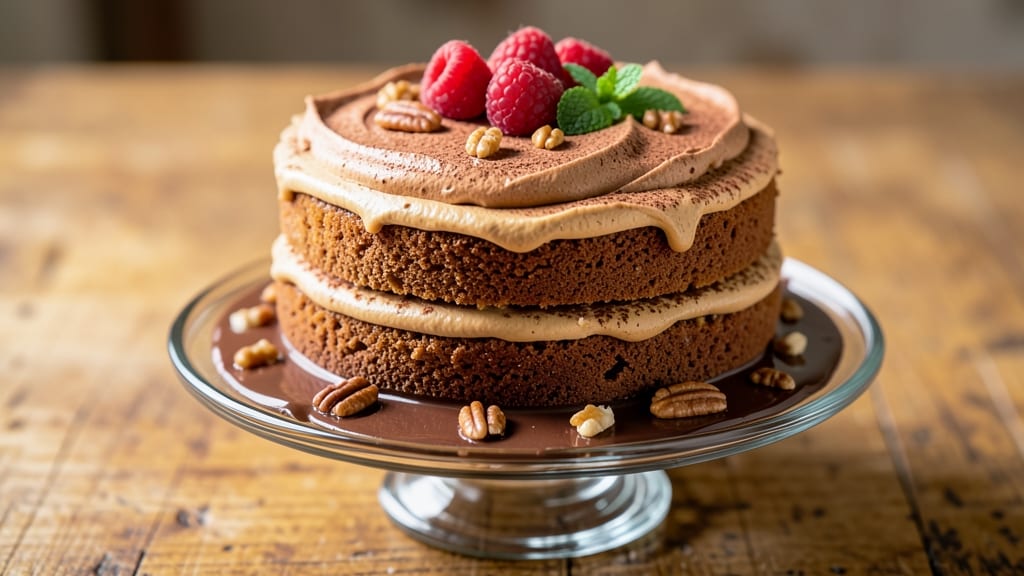
Barefoot Contessa's German chocolate cake delivers the rich, fudgy layers and pecan-packed crunch that make it a classic dessert showstopper. This triple-layered masterpiece combines moist chocolate cake with a velvety frosting and candied pecans for that signature crunch—just like Ina Garten's signature style.
The secret lies in precise baking techniques and layering that ensures every bite is perfectly balanced between dense chocolate and buttery richness.
What sets this recipe apart is the foolproof method for achieving consistent layers without cracking, paired with a frosting so smooth it almost disappears between bites. The candied pecans, toasted to a golden brown, add texture and sweetness that complement the deep chocolate flavor perfectly.
With three layers and a generous pecan topping, this cake is built for sharing—or keeping all to yourself.
The cake itself bakes up with a tender crumb that stays moist for days, thanks to a simple yet effective technique of folding in melted butter and buttermilk.
The frosting, made with just a few ingredients, is whipped to a light, airy consistency that melts into the cake without overwhelming it. Each layer is carefully assembled, ensuring no dry spots or uneven texture—just pure, decadent perfection.
Perfect for celebrations or a special treat, this German chocolate cake requires patience in the baking and assembly but delivers results that are worth every minute.
Whether you're serving it at a dinner party or simply indulging in a slice, the combination of moist cake, creamy frosting, and crunchy pecans makes it a dessert that never disappoints. Let's get started on creating your own showstopper.
Ingredients for barefoot contessa german chocolate cake
Twelve essential ingredients create Ina Garten's signature triple-layered German chocolate cake masterpiece.
| Ingredient | Amount | Notes |
|---|---|---|
| All-Purpose Flour 🌾 | 3 ½ cups | Sifted for light texture |
| Unsalted Butter 🧈 | 2 cups | Room temperature, European style preferred |
| Granulated Sugar 🍚 | 2 ½ cups | Superfine preferred for smoothness |
| Dark Brown Sugar 🍚 | 1 cup | Packed firmly for moisture |
| Buttermilk 🥛 | 1 ½ cups | Room temperature for best results |
| Large Eggs 🥚 | 4 whole | Room temperature, separated |
| Baking Powder 🧂 | 1 ½ tsp | Diamond Crystal preferred |
| Salt 🧂 | ½ tsp | Fine sea salt |
| Unsweetened Cocoa Powder 🍫 | ¾ cup | Dutch-processed for smoothness |
| Vanilla Extract 🌿 | 2 tsp | Pure Madagascar bourbon |
| Pecans 🥜 | 2 cups | Chopped, toasted for crunch |
| Light Corn Syrup 🍯 | ½ cup | For candied pecan sweetness |
| Powdered Sugar 🍚 | 4 cups | For smooth frosting |
| Heavy Cream 🥛 | 1 ½ cups | Cold for whipped texture |
| Semisweet Chocolate Chips 🍫 | 1 ½ cups | High-quality for melting |
The butter and sugars are non-negotiable here—European-style unsalted butter yields richer flavor, and superfine sugar dissolves smoothly for a velvety texture. For the flour, King Arthur or Gold Medal brands are ideal, as their protein content balances tenderness and structure. The buttermilk should be room temperature; cold buttermilk can cause uneven layers. Pecans are best toasted in a dry pan until golden—about 5 minutes—then chopped into uneven pieces for authentic crunch. If you can't find Dutch-processed cocoa powder, natural cocoa works at half the amount, but the flavor will be more bitter.
No buttermilk? Substitute with 1.5 cups milk plus 1.5 tbsp vinegar or lemon juice, let it sit for 5 minutes. Short on corn syrup? Honey or maple syrup at equal measure works, though the candied pecans may caramelize faster. For the frosting, high-quality chocolate chips (like Ghirardelli or Guittard) melt more smoothly than store brands. The heavy cream must be cold—whipping it too warm causes butter separation. If you prefer a lighter frosting, reduce the powdered sugar to 3 cups, but the traditional recipe's richness is part of its charm. The cake layers should be baked just until a toothpick comes out with moist crumbs—not dry.
Assembled cake keeps beautifully in an airtight container at room temperature for 3 days, while refrigerated layers last 1 week. For longer storage, wrap each layer individually in plastic and freeze for up to 3 months. The frosting can be made a day ahead and stored in the fridge—rewhip briefly before use. Candied pecans stay fresh for 2 weeks in an airtight container. When serving, let the cake sit at room temperature for 30 minutes before slicing to ensure clean cuts through the layers.
Why You'll Love This Recipe
- No Mixer Needed: I swear by this—just a bowl and a fork. The buttermilk and butter come together so smoothly, you’ll have batter in minutes. Honestly, my stand mixer sits idle for this one.
- Rich Without Fuss: That dark brown sugar and melted butter combo? Chef’s kiss. It’s got depth—caramel notes that linger—but zero fancy techniques. Even my picky teen devours seconds.
- Weeknight Hero: Bake it Monday, eat it Friday. The texture stays perfect, and it’s the kind of cake that tastes just as good cold as it does warm. (Yes, even on a Tuesday night.)
- Budget Luxury: Four simple ingredients, one showstopper dessert. The buttermilk keeps it moist without breaking the bank—plus, it’s the kind of cake that makes you look like you slaved over it.
Step-by-step instructions for triple-layered German chocolate cake
This cake delivers fudgy, moist layers with perfect texture—every step ensures rich flavor and that signature pecan crunch.
Cream Butter and Sugars for Maximum Moisture
In a stand mixer fitted with the paddle attachment, beat the 2 cups unsalted butter with the 2.5 cups granulated sugar and 1 cup dark brown sugar on medium speed for 4-5 minutes. The mixture should become light, fluffy, and nearly triple in volume. This creaming process incorporates air, which develops that signature tender crumb.
I press down on the butter-sugar mixture with a spatula during the last minute to ensure all the sugar crystals are fully dissolved. This prevents grainy pockets in the final cake. The butter should be completely smooth with no visible lumps, and the sides of the bowl should be nearly clear of batter when you lift the paddle.
Combine Wet Ingredients for Perfect Texture
Add the 4 whole large eggs, one at a time, mixing on low speed after each addition until fully incorporated. Then stir in the 1.5 cups buttermilk, 2 teaspoons vanilla extract, 0.75 cup unsweetened cocoa powder, 1.5 teaspoons baking powder, and 0.5 teaspoon salt. Mix on low speed just until combined—about 30 seconds—to avoid developing gluten.
The buttermilk adds moisture and tenderness, while the cocoa powder provides that deep chocolate flavor. I always use Dutch-processed cocoa for a smoother texture and more vibrant color. The mixture should be thick but pourable, with no dry spots remaining in the bowl.
Incorporate Dry Ingredients and Fold in Pecans
In a separate bowl, whisk together the 3.5 cups all-purpose flour until smooth. Gradually add the flour to the wet mixture in three additions, mixing on low speed just until combined after each addition. This gradual incorporation prevents overmixing, which can lead to a tough cake.
Remove the bowl from the mixer and gently fold in the 2 cups chopped toasted pecans and 1.5 cups semisweet chocolate chips using a silicone spatula. Be careful not to overmix—the batter should be thick and slightly streaked with chocolate and pecans. The pecans should be evenly distributed throughout the batter for that signature crunch in every bite.
Bake Layers for Even Cooking
Preheat your oven to 350°F. Divide the batter evenly among three 8-inch round cake pans lined with parchment paper. Bake for 25-30 minutes, or until a toothpick inserted into the center comes out clean. Rotate the pans halfway through baking for even cooking.
The cake layers should be moist but not wet, with a slightly domed top that springs back when pressed gently. Overbaking will result in dry layers, so I recommend pulling them out as soon as they pass the toothpick test. Let the cakes cool in the pans for 10 minutes before transferring to a wire rack to cool completely.
Prepare the Pecan Frosting
In a saucepan, combine the 1.5 cups heavy cream, 0.5 cup light corn syrup, and 4 cups powdered sugar. Cook over medium heat until the mixture thickens and reaches 160°F on a candy thermometer. Remove from heat and stir in the 2 cups chopped toasted pecans until fully coated.
Spread the warm pecan frosting between the cooled cake layers and on the top and sides of the cake. The frosting should be thick enough to hold its shape but still spreadable. Chill the cake in the refrigerator for at least 2 hours before serving to allow the frosting to set properly.
Pro Tips For Making Barefoot Contessa German Chocolate Cake
- MEASURE BUTTER COLD: The Barefoot Contessa recipe calls for softened butter, but not melted—think "just give at room temp" (about 10 minutes out of the fridge). I learned this the hard way: melted butter makes the cake dense. Press it into the flour with your fingers to check—it should dent slightly but hold shape.
- WHISK BUTTERMILK FIRST: Don’t just dump buttermilk into the dry ingredients. Whisk it with the eggs and vanilla first—this keeps the batter smoother and prevents lumps. I used to skip this, and the texture always felt slightly grainy. Takes 30 seconds but makes a real difference.
- DON’T OVERMIX THE BATTER: Once you add the flour, stop mixing after just combining. The second you see streaks disappear, call it done. Overmixing develops gluten, and this cake relies on tender crumb. I’ve ruined batches by thinking "one more turn won’t hurt"—it does.
- BAKE UNTIL 205°F INTERNAL: The recipe says "until a toothpick comes out clean," but aim for 205°F internal temp for that perfect moist center. I used to pull it at 195°F, and it always dried out overnight. A thermometer is worth it—no guessing.
Pro cooking tips for great barefoot contessa german chocolate cake
Butter Temperature Matters
The butter must be room temperature—not melted, not cold—when you start creaming. I press my finger into a pat of butter; if it leaves a slight indent but doesn’t flatten completely, it’s ready. Cold butter creates dense layers, while melted butter can cause the cake to sink.
European-style butter (like Plugrá or President) has higher fat content, which gives a richer flavor and better texture. If your kitchen is warm, let the butter sit out for 1-2 hours before starting. 🧈
Creaming Time is Critical
Cream the butter and sugars for exactly 4-5 minutes on medium speed—no longer, no shorter. This incorporates enough air for a light crumb while fully dissolving the sugar. I test by pressing the mixture with a spatula; if it holds its shape but leaves a clean imprint, it’s perfect.
Under-creaming results in a dense cake, while over-creaming can cause butter separation. Use a stand mixer for consistency; hand-whisking is too labor-intensive for reliable results. ⏱️
Layering the Batter Evenly
Divide the batter exactly equally among the three pans—use a kitchen scale for precision if possible. I weigh each pan after pouring to ensure they’re within 5 grams of each other. Tap the pans gently on the counter to remove air bubbles before baking.
Uneven layers lead to uneven baking, which can cause cracking. For extra insurance, I run a thin spatula around the edges of each pan to create a clean seal before baking. 📏
Pecan Toasting Secrets
Toast the pecans in a dry skillet over medium-low heat for 5-6 minutes, stirring constantly, until they’re golden brown and fragrant. Over-toasting burns them, making them bitter, while under-toasting leaves them raw-tasting. Chop them into uneven pieces—some larger, some smaller—for authentic texture.
I pulse them in a food processor for 3-4 seconds between batches to ensure even toasting. Let them cool completely before adding to the batter to prevent steam from developing in the oven. 🥜
Frosting Temperature Control
The frosting must reach 160°F—not boiling, not lukewarm. Use a candy thermometer for accuracy; guessing leads to runny or grainy frosting. Warm the heavy cream slightly before combining to help dissolve the powdered sugar more easily.
Spread the frosting warm between layers for better adhesion, but let it cool slightly before applying to the top to prevent melting. Chill the cake for at least 2 hours before slicing—this ensures clean cuts through the layers. ❄️
Chilling for Clean Slices
Never slice the cake straight from the fridge—let it sit at room temperature for 15-20 minutes before serving. This allows the frosting to soften slightly, making it easier to cut through the layers without tearing. For a showstopping presentation, dust the top with powdered sugar right before serving.
Store leftovers in an airtight container at room temperature for up to 3 days—the frosting stays fresh longer than you’d expect. 💫
Nutrition facts
Frequently asked questions
Can I make this cake in a 9-inch pan instead of 8-inch?
Yes, but you'll need to adjust the baking time and frosting. For 9-inch pans, reduce the batter to 2 layers and bake for 30-35 minutes at 350°F. The frosting will need to be slightly thicker to cover the larger surface area. Use 1.5 cups pecan frosting per layer instead of the original recipe's measurements.
Why does my cake turn out dense instead of moist?
Overmixing the batter or using cold butter are the most common culprits. Always cream the butter and sugars for exactly 4-5 minutes on medium speed, and ensure your butter is room temperature (press your finger into it—it should leave a slight indent). Also, don't overbake; pull the cake out when a toothpick comes out with moist crumbs, not dry.
Can I substitute corn syrup with something else?
Yes, but the texture may change slightly. For the candied pecans, use honey or maple syrup in a 1:1 ratio. For the frosting, you can replace the corn syrup with equal parts light corn syrup substitute (like agave) or additional powdered sugar (reduce by 1/4 cup). The frosting will be slightly less smooth but still delicious.
How do I store leftovers without the frosting melting?
Store the cake in an airtight container at room temperature for up to 3 days. For longer storage, wrap each layer individually in plastic wrap and freeze for up to 3 months. To serve, let the cake sit at room temperature for 30 minutes before slicing. The frosting will soften slightly but won't melt completely.
What's the secret to making the frosting extra smooth?
Use powdered sugar that's been sifted and a candy thermometer to monitor the temperature—it must reach exactly 160°F. Also, ensure your heavy cream is cold before whipping it into the warm sugar mixture. For extra smoothness, strain the frosting through a fine-mesh sieve before spreading it on the cake.