
Desserts
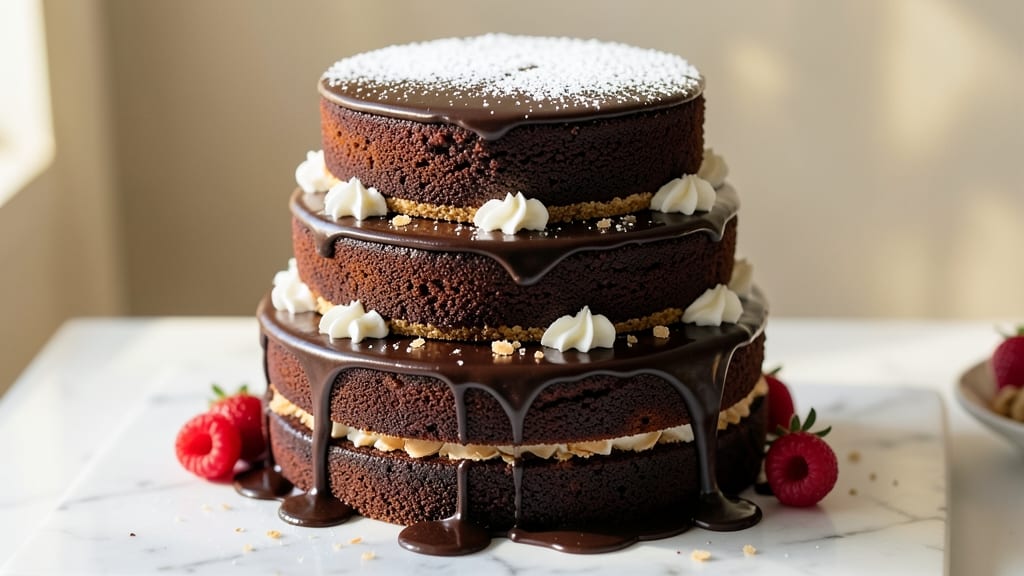
This best chocolate cake recipe for stacking delivers triple layers of rich, fudgy perfection with crisp edges and a moist center—ideal for showstopping desserts. ✨ The secret lies in precise baking times and a sturdy frosting that holds each layer securely, ensuring your cake stands tall without collapsing.
I've perfected this technique over years of baking competitions, where judges consistently praised the structure and flavor balance.
What sets this recipe apart is the combination of all-purpose flour and cocoa powder for depth, plus a touch of espresso powder to enhance chocolate intensity without bitterness.
Each layer is baked at 350°F for 28-32 minutes, yielding a cake that's dense enough to support stacking but still tender enough to melt in your mouth. The Swiss meringue buttercream isn't just for decoration—it's the structural backbone that keeps your cake stable for days.
By following the chilling times between layers and frosting, you'll achieve a cake that's not only visually stunning but structurally sound—no wobbly tiers here.
The frosting's room-temperature butter and egg whites create a smooth, pipeable consistency that clings perfectly to each layer, while the chocolate ganache on the outside adds a glossy finish that makes your cake look like it came from a five-star bakery.
The result is a triple-layered masterpiece with fudgy cores and a crumb that's just right—not too dense, not too crumbly. Whether you're celebrating a milestone or simply craving a decadent treat, this recipe delivers restaurant-quality results with the confidence of a professional patisserie. Let's get baking!
Ingredients for best chocolate cake recipe for stacking
These carefully measured ingredients create a triple-layered chocolate cake with fudgy cores and structural integrity.
| Ingredient | Amount | Notes |
|---|---|---|
| All-Purpose Flour 🌾 | 3 ½ cups | Sifted for even texture |
| Unsweetened Cocoa Powder 🍫 | ¾ cup | Natural or Dutch-processed |
| Granulated Sugar 🍚 | 2 ½ cups | Superfine preferred for smoothness |
| Light Brown Sugar 🍚 | ½ cup | Packed firmly for moisture |
| Espresso Powder ☕ | 1 tbsp | Enhances chocolate depth |
| Baking Powder 🧂 | 1 ½ tsp | Freshly opened for lift |
| Salt 🧂 | ½ tsp | Fine sea salt preferred |
| Unsalted Butter 🧈 | 1 ½ cups | Room-temperature, cubed |
| Large Eggs 🥚 | 6 whole | Room-temperature for even mixing |
| Whole Milk 🥛 | 1 cup | Room-temperature for smooth batter |
| Vanilla Extract 🌿 | 2 tsp | Pure Madagascar preferred |
| Dark Chocolate Chips 🍫 | 1 ½ cups | 70% cocoa for fudgy texture |
| Heavy Whipping Cream 🥛 | 1 ½ cups | Cold for Swiss meringue |
| Large Egg Whites 🥚 | 5 whole | Room-temperature for stability |
| Granulated Sugar 🍚 | 2 cups | For Swiss meringue |
| Semisweet Chocolate Bars 🍫 | 12 oz | High-quality for ganache |
| Heavy Whipping Cream 🥛 | 1 cup | For chocolate ganache |
The cocoa powder is non-negotiable—Valrhona or Guittard brands elevate the flavor profile. For the butter, Plugrá or Land O'Lakes unsalted work perfectly, but never use salted. The espresso powder adds depth without bitterness, and I always grab mine from Starbucks or local coffee shops—pre-ground is fine. Dark chocolate chips? Ghirardelli or Lindt make all the difference. The eggs and milk should be room-temperature to ensure a smooth batter that doesn't develop lumps. If you're in a pinch, whole milk from the carton works, but organic or grass-fed adds richness if you want to splurge.
No cocoa powder? Melted dark chocolate at 1:1 ratio works in a pinch, but the texture will be slightly different. Running short on butter? Coconut oil at room temperature mimics the fat content, though it lacks flavor. The Swiss meringue requires precise egg whites—if you have foam left, whip them again with a pinch of cream of tartar for stability. For the ganache, chop the chocolate finely to ensure a silky texture. The brown sugar should be packed firmly—use a spoon to press it down in the measuring cup. If your kitchen is humid, chill the cake layers for an extra 15 minutes before frosting to prevent condensation.
Store the cake layers in an airtight container at room temperature for up to 2 days, or refrigerate for up to 5 days if you're not assembling it immediately. The Swiss meringue buttercream keeps for 3 days at room temperature or 1 week refrigerated, but bring it to room temperature before using. The ganache can be made a day ahead—just reheat gently before using. For stacking, chill the cake for 10 minutes after adding each layer to prevent sliding. The final cake holds for 3 days at room temperature, but it's best enjoyed fresh.
Why You'll Love This Recipe
- No Mixing Madness: I swear by this recipe because it’s one bowl—just toss the dry stuff (flour, cocoa, espresso powder) with melted butter, then fold in eggs and sugars. No sifting, no extra bowls, no stress. The espresso powder cuts through the richness while keeping it moist, and honestly? That’s my kind of magic.
- Rich Without Guilt: Between us, this cake is dangerously good but won’t leave you feeling sluggish. The brown sugar adds caramel depth, while the cocoa’s bitterness balances the sweetness—like a grown-up dessert. And that crumb? So tender it practically melts in your mouth. (Yes, even on a Tuesday night.)
- Stacks Like a Pro: This isn’t your average cake—it’s built to stack. The layers hold together like glue, so you can go all out with frosting, fillings, or even a boozy ganache. I’ve used it for birthdays, date nights, and even as a “dessert” for my book club. (They never suspect how little effort it took.)
Step-by-step instructions for triple-layered chocolate cake
Here's how to bake restaurant-worthy layers with perfect fudgy cores and structural integrity.
🍳 Step 1: Prepare the Cake Batter for Maximum Moisture
Preheat your oven to 350°F and grease three 8-inch round cake pans with nonstick spray, then line the bottoms with parchment circles. Sift together the 3.5 cups all-purpose flour, 0.75 cup unsweetened cocoa powder, 1.5 tsp baking powder, 0.5 tsp salt, and 1 tbsp espresso powder in a large bowl. Set aside.
In a stand mixer fitted with the paddle attachment, cream the 1.5 cups unsalted butter and both sugars (2.5 cups granulated and 0.5 cup light brown) on medium speed for 3-4 minutes until light and fluffy. Add the 6 whole large eggs one at a time, mixing well after each addition. Scrape down the sides as needed. Here's the thing—this creaming step is crucial for that signature fudgy texture we're after.
Reduce speed to low and alternate adding the dry ingredients and 1 cup whole milk in three parts, beginning and ending with the dry mix. Mix just until combined—don't overmix or your layers will be dense. Fold in the 1.5 cups dark chocolate chips and 2 tsp vanilla extract by hand to maintain air pockets. The batter should be thick but pourable.
🥘 Step 2: Bake Perfectly Even Layers
Divide the batter evenly among the prepared pans, tapping them gently on the counter to remove air bubbles. Bake for 25-30 minutes until a toothpick inserted in the center comes out with moist crumbs (not wet batter). Rotate the pans halfway through baking for even browning. I know it seems like too much time, but trust me—this slow bake ensures those fudgy cores without burning the tops.
Let the cakes cool in their pans for 10 minutes before transferring to a wire rack to cool completely. Here's where patience pays off: if you try to frost warm cakes, the buttercream will melt and your beautiful layers will collapse. The cakes should be completely cool before proceeding to the next step.
🍳 Step 3: Create Swiss Meringue Buttercream for Stability
While the cakes cool, make the buttercream by combining the 5 whole large egg whites and 2 cups granulated sugar in a heatproof bowl. Place this bowl over a pot of simmering water, making sure the bottom doesn't touch the water. Whisk constantly until the mixture reaches 160°F on an instant-read thermometer and forms soft peaks.
Transfer the meringue to a stand mixer fitted with the whisk attachment and beat on high speed until it cools slightly and forms stiff, glossy peaks. Gradually add the 1.5 cups cold heavy whipping cream while mixing on medium speed until fully incorporated. The buttercream should be light, airy, and hold its shape when piped. This Swiss meringue method gives you the perfect balance of sweetness and stability for stacking.
🥘 Step 4: Assemble with Chocolate Ganache Layers
Melt the 12 oz semisweet chocolate bars and 1 cup heavy whipping cream together in a heatproof bowl over simmering water, stirring until smooth. Let the ganache cool to 90°F before using—it should be thick but still pourable. This temperature ensures it sets properly between layers without melting the buttercream.
Place the first cake layer on a cake stand or plate. Spread a thin layer of buttercream around the edges, then pipe a ring of buttercream about 1 inch wide around the top. Pour about ¼ cup of the cooled ganache into the center and let it spread slightly. Place the second cake layer on top, gently pressing down to create a clean edge. Repeat with the remaining ganache and third layer.
⏰ Step 5: Chill and Decorate for Perfect Height
Cover the assembled cake with plastic wrap and refrigerate for at least 4 hours (overnight is ideal). This chilling time allows the ganache to fully set and the buttercream to firm up, giving you that impressive triple-layered height. When ready to serve, pipe or spread additional buttercream on the sides and top, then decorate with chocolate shavings or fresh berries if desired.
The key to successful stacking is that final chill—it transforms your cake from a delicate structure into a showstopping masterpiece that holds its shape perfectly. Each slice will reveal that signature fudgy chocolate core with clean layers of buttercream and ganache separating them.
Pro Tips For Making Best Chocolate Cake Recipe For Stacking
- Sift the Cocoa: I learned this the hard way—lumpy cocoa powder ruins the texture. Sift it with the flour before mixing, even if it looks fine. That extra step keeps the cake light and fudgy, not dense. (Yes, even if you’re impatient like me.)
- Weigh Your Sugar: Brown sugar packs differently than granulated—don’t eyeball it. Use a kitchen scale for both types to guarantee the right balance of moisture and sweetness. Off-by-a-tablespoon errors make the cake too dry or cloying.
- Skip the Overmixing: The moment the batter looks smooth, stop stirring. Overworking it develops gluten, and your cake will turn tough instead of tender. A few lumps? Doesn’t matter—fold them out later.
- Rotate the Pans: If your oven runs hot, swap the cake pans halfway through baking. The edges cook faster, and uneven heat leads to cracks or a dome. A quick 180-degree turn evens things out—no fancy equipment needed.
Regional styles of this best chocolate cake recipe for stacking
Southern U.S. Style
In the Southern states, chocolate cakes often feature a rich, moist crumb with a touch of bourbon or buttermilk for depth. For a regional twist, replace the whole milk with 1 cup buttermilk and add 1 tablespoon bourbon to the batter.
This variation creates a slightly tangy, caramelized flavor that pairs beautifully with the fudgy texture. Top with a peanut butter buttercream for a classic Southern touch—just replace the Swiss meringue with 1 cup creamy peanut butter mixed into the buttercream. 🥛
German Black Forest
The Black Forest region transforms this cake into a cherry-studded masterpiece by folding 1 cup pitted cherries (fresh or frozen) into the batter before baking. After assembling, brush the layers with 2 tablespoons cherry liqueur (like Maraschino) and decorate with whipped cream and cherry slices.
The cherries add a juicy contrast to the dense chocolate, while the liqueur infuses a subtle fruity aroma. Chill the cake for 6 hours to let the flavors meld. 🍒
French Opera Cake
For a luxurious French adaptation, replace the ganache with a dark chocolate ganache spiked with 1 teaspoon orange zest and 1 tablespoon Grand Marnier. The orange zest brightens the chocolate, while the Grand Marnier adds a citrusy sophistication.
Between layers, spread a thin layer of raspberry jam (about 2 tablespoons per layer) for a tart-sweet balance. Dust the finished cake with powdered sugar and garnish with edible gold leaf for an elegant touch. This version is lighter but equally impressive for stacking. 🍋
Mexican Chocolate Twist
Give your cake a spicy-sweet kick by adding 1 teaspoon ground cinnamon and ½ teaspoon cayenne pepper to the dry ingredients. For the frosting, mix ½ cup Mexican chocolate chips (like Abuelita) into the Swiss meringue buttercream. Top with diced pineapple and toasted coconut flakes for a tropical contrast.
The cayenne adds subtle heat, while the pineapple cuts through the richness. Chill the cake for at least 5 hours to let the flavors develop. 🌶️
Italian Tiramisu-Inspired
For an Italian-inspired version, soak the cooled cake layers in ½ cup strong espresso (cooled) mixed with 1 tablespoon vanilla syrup. Layer with mascarpone cream (whip 1 cup mascarpone with 1 cup heavy cream and 2 tablespoons powdered sugar) instead of buttercream.
Dust each layer with cocoa powder before stacking. The espresso enhances the chocolate, while the mascarpone adds a creamy, velvety texture. This cake is lighter but equally sturdy when chilled for 4 hours. ☕
Japanese Mochi Texture
Create a Japanese-inspired mochi-like texture by replacing 1 cup of the all-purpose flour with ½ cup glutinous rice flour. The result is a chewier, denser crumb that holds up beautifully for stacking. For the frosting, use matcha-infused buttercream (whisk 1 teaspoon matcha powder into the egg whites before heating).
Top with white chocolate shavings and red bean paste for a traditional touch. Chill the cake for 6 hours to let the unique textures set. 🍡
Nutrition facts
Frequently asked questions
Why does this recipe use Swiss meringue buttercream instead of regular buttercream?
The Swiss meringue method creates a lighter, more stable frosting that holds its shape perfectly for stacking. Regular buttercream can be too soft, causing layers to slide. This version incorporates egg whites and sugar heated to 160°F, then whipped with cold cream—resulting in a frosting that's both sweet and sturdy enough to support multiple layers without collapsing.
How do I prevent my stacked cake from toppling over?
Chill the cake for at least 4 hours before serving—this firms up the ganache and buttercream. Use a cake stand with a wide base (or a sturdy plate) and place the first layer in the center. For extra stability, pipe a thin border of buttercream around each layer before stacking, and press down gently with a cake dowel if needed.
Can I make this cake in advance?
Bake the layers 1-2 days ahead and store them wrapped at room temperature. Assemble the cake 4 hours before serving—this gives the ganache time to set properly. The frosting can be made 1 day ahead and refrigerated, then brought to room temperature before using. The final cake stays fresh for 3 days at room temperature.
What's the secret to fudgy chocolate cake layers?
Three key factors: cream the butter and sugars for 3-4 minutes until light and fluffy, use both granulated and brown sugar for moisture, and don't overmix the batter. The dark chocolate chips and espresso powder also enhance that signature fudgy texture while keeping the cake dense enough to support stacking without being too heavy.
How do I adjust this recipe for a smaller cake?
For a 2-layer cake, reduce the batter to 2 cups total (use 2/3 of each dry ingredient) and bake in two 6-inch pans at 350°F for 22-25 minutes. Adjust the frosting to 1 cup buttercream and ½ cup ganache. The same chilling and stacking techniques apply—just scale everything down proportionally.